Coral Gables Home Pricing Strategy: What Sellers Should Know
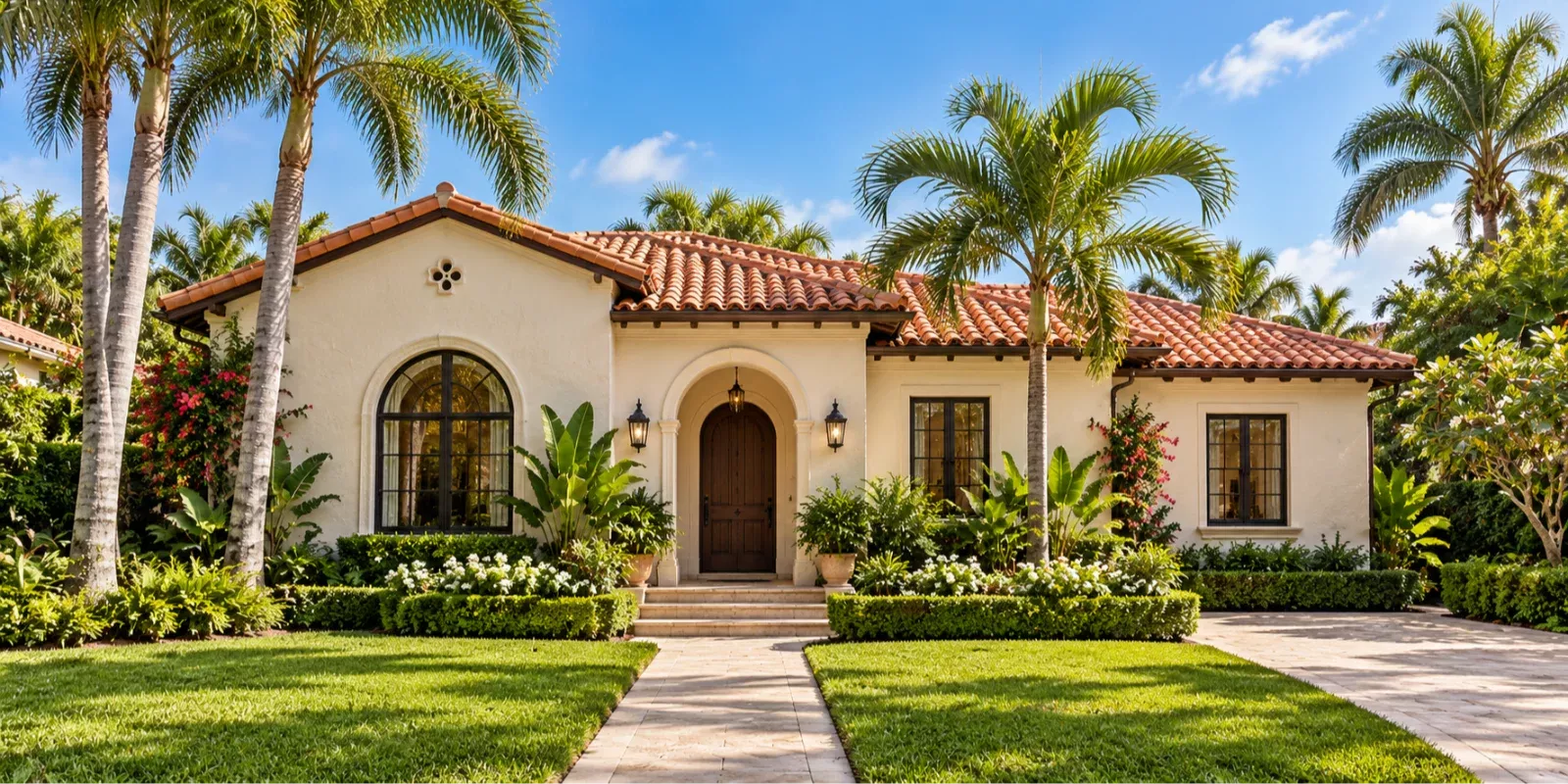
The right asking price isn't necessarily the highest or the lowest. It's the price that gives your property the strongest position in the market.
When preparing to sell a home, one of the first questions homeowners ask is, "How much can I get for my property?"
But there's another question I believe is equally important:
What pricing strategy will help me achieve the best possible outcome?
With over 25 years of experience in South Florida real estate, I've seen how pricing influences buyer interest, negotiations, marketing time, and ultimately, the success of a transaction.
And in a market as distinctive as Coral Gables, choosing that price requires more than comparing square footage or checking online estimates.
A property's estimated market value and its asking price serve different purposes.
Market value is supported by what comparable properties have sold for under relevant market conditions. The asking price is a strategic decision about how to introduce your property to buyers.
A seller might choose to price slightly above market expectations, close to estimated value, or occasionally below it to encourage competition.
Each approach involves different opportunities and risks.
The important question isn't simply whether a price is high or low, but whether the available market evidence supports the strategy.
Consider three properties included in a 2026 Coral Gables MLS sales report.
| Property | Original Asking Price | Reported Sale Price | CDOM* |
|---|---|---|---|
| 1532 Trillo Avenue | $1,499,000 | $1,400,000 | 3 |
| 1201 Obispo Avenue | $1,590,000 | $1,360,000 | 144 |
| 1551 Ancona Avenue | $1,699,995 | $1,400,000 | 235 |
CDOM: Cumulative Days on Market.
Source: SEFMLS, 2026. Transaction details subject to final verification.
All three properties were originally offered between approximately $1.5 million and $1.7 million, yet their reported selling prices ranged from $1.36 million to $1.4 million.
The differences between their original asking prices and reported selling prices were approximately:
1532 Trillo Avenue: 6.6% below the original asking price.
1201 Obispo Avenue: 14.5% below the original asking price.
1551 Ancona Avenue: 17.6% below the original asking price.
These transactions illustrate an important point: the final selling price tells us what a buyer paid, but it doesn't tell the entire story of how the property reached that outcome.
A longer marketing period or a substantial difference between the original asking price and the final sale price does not necessarily mean a property was overpriced, but could be a reason it took long to sell. Some properties are more attractive that others, but price should reflect that.
Property condition, competing inventory, buyer demand, seller circumstances, and changes in market conditions may all contribute.
However, these examples demonstrate why sellers should evaluate their pricing expectations carefully and understand how their property competes in the market.
The same three properties illustrate another important consideration: homes that sell for similar prices can have very different sizes.
According to the MLS report:
1532 Trillo Avenue: 1,935 square feet of living area, selling at approximately $724 per square foot.
1201 Obispo Avenue: 1,575 square feet, selling at approximately $863 per square foot.
1551 Ancona Avenue: 1,892 square feet, selling at approximately $740 per square foot.
This is why relying solely on a neighborhood's average price per square foot can be misleading.
A smaller property may command a higher price per square foot, but that doesn't necessarily mean it offers superior value or justifies applying that same figure to a larger home.
Lot size, renovation quality, location, functionality, and architectural characteristics all influence how buyers perceive value.
My background in architecture has reinforced the importance of looking beyond the numbers. A property's layout, quality of space, natural light, relationship to its lot, and potential for improvement can significantly affect its appeal.
In Coral Gables, those details deserve careful consideration.
A historic Mediterranean-style residence near the Granada Golf Course may attract different buyers than a renovated home in the South Gables or a waterfront property in Gables Estates.
Even within the same neighborhood, two homes with similar living areas may compete at different price points.
Before recommending a listing price, I consider three essential groups of properties:
Closed sales: What buyers have actually paid
Closed transactions provide evidence of what buyers have been willing and able to pay.
However, the most recent sale isn't necessarily the best comparable. Location, property condition, renovations, lot characteristics, and transaction circumstances all matter.
Active listings: What your home is competing against
Buyers aren't making decisions in isolation. They're comparing your property with other homes currently available.
If a similarly located and better-updated home is being offered at the same price, that competition may influence how buyers perceive your property's value.
Pending transactions: Where buyer interest may be heading
Properties under contract can provide valuable clues about current buyer activity, even when the final negotiated price isn't yet available.
Together, these three groups create a more meaningful picture than an automated valuation or an average price per square foot.
Some sellers consider listing their homes below estimated market value to generate more activity and potentially encourage multiple offers.
This strategy can work under the right circumstances, particularly when buyer demand is strong and competing inventory is limited.
But it isn't a guaranteed formula.
Imagine a property with an estimated market value of $1.5 million being offered at $1.35 million.
The intention might be to attract enough interest to encourage competing buyers to bid above the asking price.
However, if demand is weaker than anticipated, the seller may receive fewer offers than expected.
The property could ultimately sell below its estimated value.
That's why I would evaluate several factors before recommending this approach:
The number and quality of competing properties.
Recent showing and sales activity for comparable homes.
The property's condition and presentation.
The depth of the potential buyer pool.
The seller's timeline and tolerance for risk.
Generating multiple offers can be beneficial, but receiving several offers isn't the ultimate objective.
Achieving favorable price and contract terms, with a reasonable likelihood of closing, is what matters.
Other sellers prefer to test the market with an ambitious asking price, believing they can always negotiate or reduce it later.
Sometimes a premium price is justified by a property's unique characteristics. But when the asking price significantly exceeds what buyers perceive as reasonable, it may discourage showings and offers.
The earliest marketing period is an important opportunity to introduce the property to interested buyers.
If the initial price limits that interest, subsequent reductions may not fully recreate the same opportunity.
Price reductions aren't inherently negative. Markets change, and adjustments are sometimes necessary.
However, repeated reductions and extended marketing time can affect how prospective buyers perceive a property.
Rather than focusing exclusively on its features, buyers may begin wondering why it hasn't sold.
That is one of the reasons I believe an informed pricing strategy should be established before the property enters the market.
Once an offer arrives, the asking-price discussion becomes only one part of the negotiation.
Consider two hypothetical offers:
Offer A: $1,550,000
The buyer requires financing and includes several contingencies.
Offer B: $1,525,000
The buyer has stronger financial qualifications, fewer contingencies, and a closing schedule that better accommodates the seller.
The higher offer may still be preferable, but the $25,000 difference should be evaluated alongside financing risk, appraisal considerations, inspection terms, concessions, and the likelihood of closing.
An experienced real estate advisor helps sellers understand those trade-offs before making a decision.
Because a successful sale isn't measured solely by the contract price. It's also measured by the terms and the ability to reach the closing table.
Pricing is only one component of a successful sale.
Property preparation, presentation, professional marketing, accessibility for showings, negotiations, and transaction management all influence the outcome.
Before recommending a price, I want to understand not only the property but also the seller's circumstances.
Is timing important? Are there improvements that should be completed before listing? Is the seller purchasing another property? Is certainty of closing more valuable than waiting for a potentially higher offer?
These considerations help shape a strategy that reflects the seller's actual priorities.
There is no universal pricing formula for selling a home in Coral Gables.
The appropriate strategy depends on the property's characteristics, current competition, buyer demand, and the seller's objectives.
Recent sales provide valuable evidence, but they must be interpreted carefully rather than reduced to simple averages or percentages.
My goal is to help homeowners understand their options, evaluate the available information, and make decisions with clarity and confidence.
Because selling a home involves more than achieving a number. It involves protecting your interests and navigating the process with the right information and professional support.
Thinking about selling your Coral Gables home?
Let's evaluate your property's market position and develop a strategy that makes sense for your circumstances.
Inés Garcia
Real Estate Advisor | Broker Associate
Coldwell Banker Realty
More than properties — I deliver the new luxury: peace of mind.

Real Estate Advisor | Broker Associate, Coldwell Banker Realty Coral Gables
More than properties — I deliver peace of mind.
Real estate decisions are complex and the stakes are high. I help buyers and sellers move forward with confidence by combining deep market knowledge, broker-level experience, and an architecture-trained eye. My role goes beyond managing a transaction. I help you understand the numbers, see what others may overlook, avoid costly mistakes, and move through the process with clarity and less stress.
Because true luxury isn't only what you buy or sell — it's how protected, informed, and at ease you feel along the way.
Based in Coral Gables, I specialize in helping Coral Gables homeowners sell, downsize, and make their next real estate move with clarity and confidence. As a Coral Gables listing agent and Broker Associate, I work with homeowners and condo owners throughout the area, bringing a strategic and practical approach to the sale of Coral Gables homes and condominiums.
With more than 25 years of real estate experience in South Florida, my background is a little different from most agents. I studied architecture in Venezuela, earned an MBA from the University of Miami, and spent years in brokerage leadership — including serving as managing broker for one of the largest real estate firms in South Florida. That combination shapes everything about how I work. I look at properties through the lens of design, function, and long-term value. I analyze pricing and strategy with a business mindset. And I bring the kind of transactional experience that only comes from having seen hundreds of deals from every angle.
I've lived in South Florida since 2000 and currently call Downtown Coral Gables home — a city I genuinely love for its walkability, architecture, and sense of community. That's not a marketing line. It means I know these neighborhoods personally, not just professionally.
For sellers, my role includes pricing strategy, preparing and positioning the property, identifying potential issues before they become obstacles, marketing, negotiating, and managing the transaction through closing. My goal is not simply to put a property on the market, but to help each seller make informed decisions about timing, preparation, pricing, and the strategy that best supports their goals.
I also work with homeowners who are downsizing or simplifying their lifestyle, helping them evaluate what to sell, where to go next, and how to coordinate the transition. Downsizing is often more than a real estate transaction. It can involve deciding what comes next, understanding the financial implications of different options, preparing a longtime home for sale, and coordinating all that is involved, at once. My role is to help make that process more manageable and less overwhelming.
Real estate involves many moving parts: pricing, timing, condition, contracts, inspections, insurance, financing, associations, negotiations. My job is to simplify all of it — without sugarcoating the hard parts. I believe in honest advice, even when it's not what someone wants to hear. I'd rather have a direct conversation early than let a client move forward on incomplete information.
If you're buying, selling, downsizing, leasing, or just trying to understand the Coral Gables or South Florida real estate market — I'm happy to talk.
Positive Impact
My goal is to positively impact the people around me by transforming the experience of buying and selling real estate into a relationship based on education, guidance, and enjoyment.
Trust
What you see is what you get. I believe in transparent relationships, honest advice, and consistent communication throughout the process.
Congruence
I follow my heart, but most importantly, I let my clients' needs, interests, and goals lead the relationship.
The REAL Customer Experience
I apply my knowledge and experience to simplify the complexities of the real estate process, helping my clients feel informed, confident, and supported every step of the way.
How to Create a New Life in a Smaller Space After Downsizing
Downsizing can be a challenging transition, but creating a fulfilling life in a smaller space is possible. Discover practical solutions, common pitfalls, and actionable steps to thrive in your new environment.
Should You Sell Your Coral Gables Home Now?
In this article, we explore the key factors that influence the decision to sell a home in Coral Gables. From market analysis and timing your sale to real case studies, we provide insights and practical advice to help homeowners determine the best course of action.
The Power of Exposure in Real Estate Listings
In real estate, broader exposure through public listings is crucial for attracting more buyers and achieving better offers. This article explores the benefits of visibility, shares successful case studies, and dispels misconceptions about private listings, emphasizing transparency.


